NASA Deep Space Bioreactor
Funded by NASA’s Deep Space Food Grant and working with Dr. David Kaplan’s lab at Tufts University, I explored how astronauts could bring lyophilized (freeze-dried) meat cells into space and culture them into edible biomass. The goal was to provide a compact, lightweight food-production system for deep-space missions by growing meat on demand rather than hauling large quantities of packaged food.
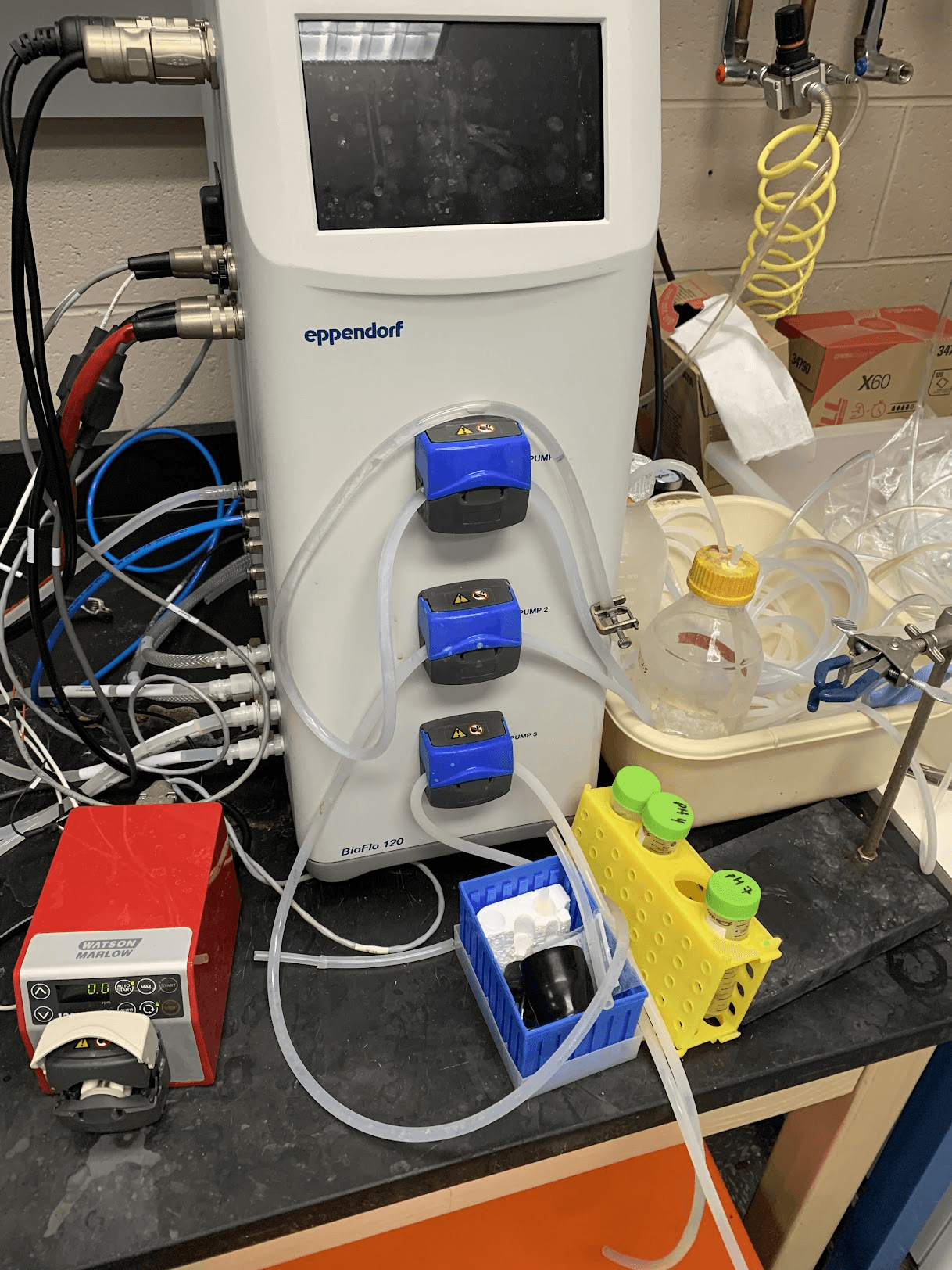
The system I designed centered around a biocompatible main chamber where cells could be rehydrated and cultured under controlled pH, CO₂, temperature, and nutrient conditions. The chamber included custom-shaped rotors designed to keep the cells in suspension and reduce clumping during growth. Once the cells reached sufficient density, the culture flowed into a secondary processing chamber that separated the cells from media, producing a concentrated biomass that could be further formed into a meat-like product (e.g., a hamburger-style patty).
Solved some fun engineering challenges, but mainly learned that cellular agriculture is nasty, and NASA moves slow.