🗓️
Jun 11, 2025
Beyond the Bands
For most of EEG’s history, we analyzed the brain using categories we invented: fixed frequency bands, neat baselines, and preprocessing pipelines designed to tame the chaos. We filtered, transformed, and smoothed everything until the signal behaved the way we wanted it to. It made the math easier, but it also meant we were only looking for what we already understood.
But the brain isn’t built in tidy buckets. It doesn’t think in “theta” or “gamma.” It’s a continuum, layers of rhythms stacked on rhythms, stretching from milliseconds all the way out to tens of seconds or more. And it turns out that the stuff we used to throw away, the ultra-slow oscillations, those twenty-second waves we assumed were drift or noise actually matter. They show up in attention cycles, large-scale cortical coordination, even the basic rhythms of consciousness. The brain was whispering to us in frequencies we’d been filtering out. And that's just one example.
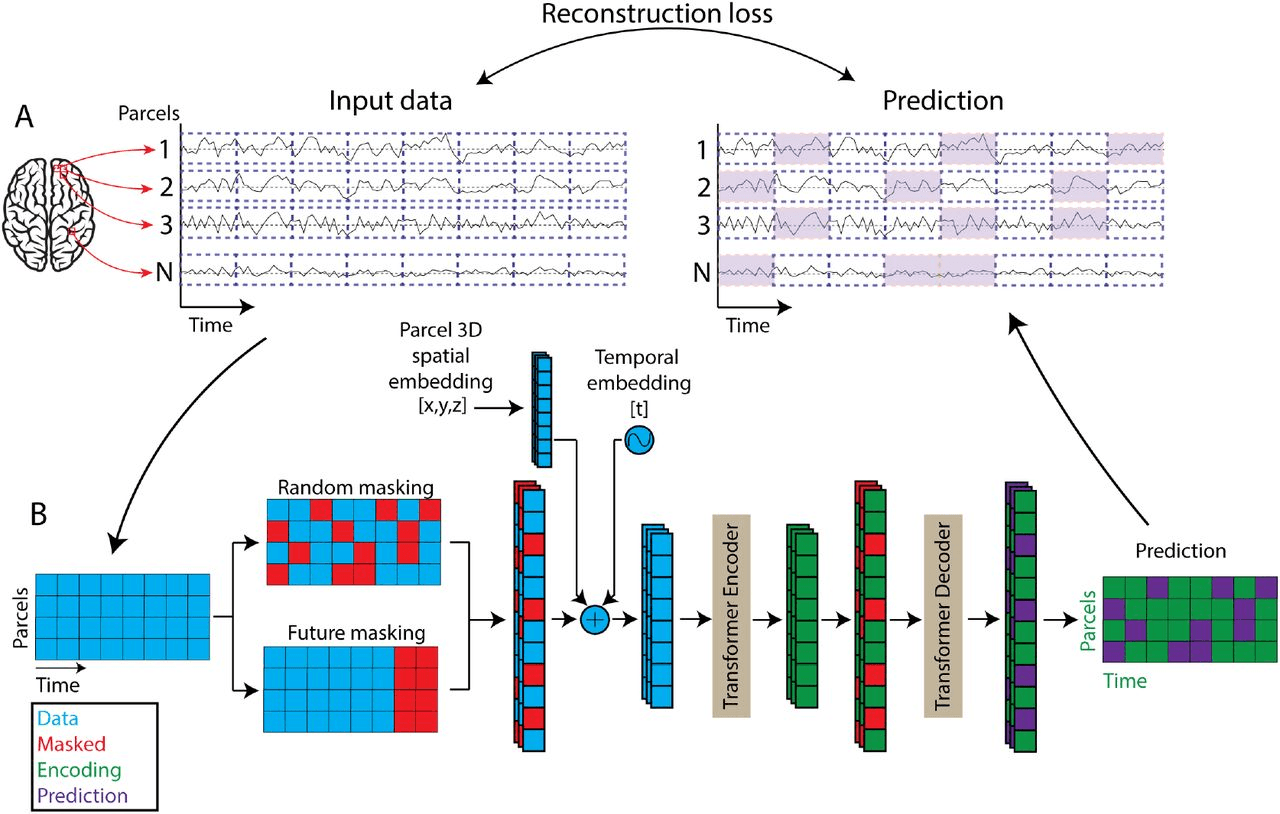
That’s why Brain Foundation Models (BFMs) feel like such a big shift. Instead of cramming the data into our pre-made boxes, these models learn from the raw stream itself, kind of like how language models picked up grammar without anyone explaining nouns and verbs. Train a model across massive EEG datasets and it starts recognizing the brain’s own structure: the fast bursts of synchrony, the slow tides of cognitive state, and everything in between.
Once we stop forcing the brain to fit our assumptions, a different picture shows up. It’s less about decoding a signal and more about finally letting the brain describe itself.
This 2025 NeurIPS will be exciting to follow: https://eeg2025.github.io/