🗓️
2016
Smart Curtains
In middle school, I kept sleeping through my alarm and missing the bus. I’d wake up, turn it off, and immediately fall back asleep. My thinking was simple: if I could open the curtains and let the sun blast into my room, I’d have no choice but to get up. So I automated my curtains and linked them to my Google Home, hoping I could open them with just my voice while still half-asleep in bed. It technically worked, though Boston winters don’t offer much sunlight, and the motors mostly just succeeded in waking up the rest of the house.
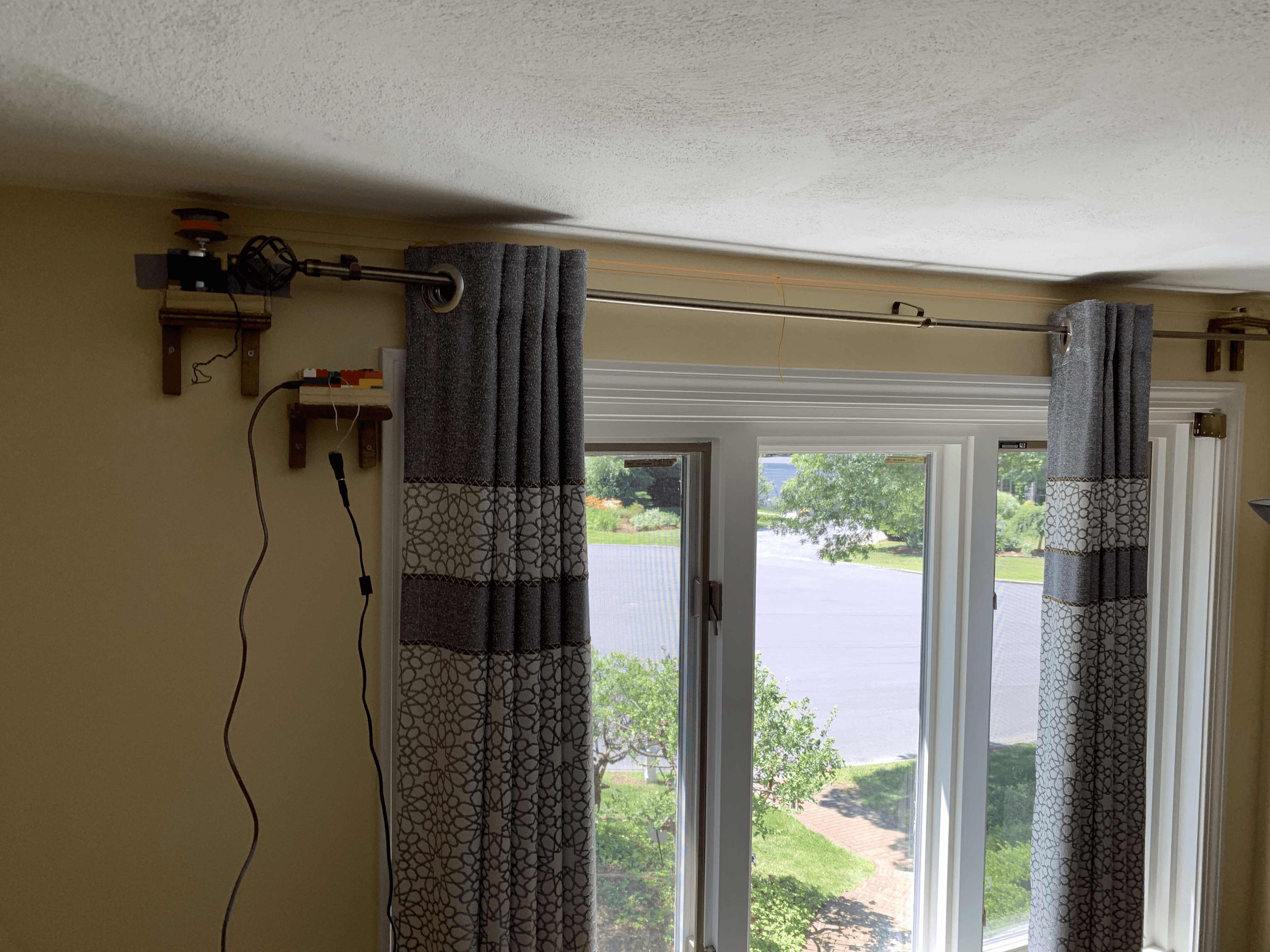
The setup used two small DC motors and a pulley line tied to the curtain rail so the motors could pull the curtains open and closed. Everything was driven by an ESP8266 (yes, already dated even then), which published state changes to Adafruit’s MQTT server. Google Home was connected through an IFTTT command, so a voice shortcut would trigger the MQTT update and set the motors in motion.
Mechanically, it worked fine: the curtains opened, the curtains closed, and it made more noise than expected. Practically, it taught me some basics about IoT, and the joy of solving a problem you definitely could’ve addressed in a simpler way. Like, say, going to bed on time.